10 Communication Channel Examples in 2026 to Transform Your Workflow
Imagine a workday where you never have to open another tab to hunt for an answer. No more digging through old emails, pinging three different people, or searching endless documents for that one critical piece of information. The way modern teams work is fractured, built on a foundation of constant searching and context-switching that silently drains productivity and focus.
But what if your primary communication tool could also be your single source of truth? This article moves beyond generic lists. We are diving deep into 10 powerful communication channel examples specifically within Slack, reframing them not just as places to talk, but as strategic opportunities to build an intelligent, self-serving knowledge system for your entire organization.
We'll dissect each channel, showing you how to transform basic chat into a powerhouse that frees your team from the endless cycle of asking and answering the same repetitive questions. Get ready to see how the right channels, augmented with powerful AI like SAI, create a seamless workflow where definitive answers find you instantly, right where you already work. This isn't about working harder; it's about making your communication work for you, creating a system that learns, adapts, and empowers everyone.
1. Slack Channels
As the digital headquarters for countless organizations, Slack channels are the cornerstone of modern team collaboration. These dedicated spaces organize conversations by topic, project, or department, transforming chaotic email threads into focused, searchable streams of communication. By creating channels like #customer-support-tier1, #project-launch-q4, or #new-hire-onboarding, you build an intuitive structure where information flows directly to the right people. This is a foundational example of a powerful communication channel because it centralizes discussions and eliminates information silos.
Strategic Implementation
Imagine your support team no longer having to search through wikis, docs, and old conversations to find an answer. Instead, they just ask SAI directly in their #support channel and get an instant, verified response. This is the transformation that happens when channels become more than just chat rooms. By integrating an AI assistant, you turn high-volume channels into self-serving knowledge hubs, eliminating context switching and drastically cutting down on response times. Your team stays focused, right where they're already working.
Actionable Takeaway: Integrate SAI into your five busiest channels. Start by identifying the channels with the most repetitive questions, such as those for IT support, HR policies, or customer service. This targeted approach ensures you see an immediate, measurable impact on team productivity and operational efficiency.
2. Direct Messages (DMs)
Direct Messages (DMs) in Slack serve as the essential private channel for one-on-one communication. They are ideal for sensitive conversations, personalized feedback, or quick clarifications that don't require the visibility of a public channel. This communication channel example is critical for building personal rapport and handling matters that require discretion, such as a manager discussing performance with a team member or an employee asking HR a private question about benefits.
Strategic Implementation
While necessary, DMs can unintentionally become information silos where valuable knowledge gets trapped. Imagine your top performers no longer being interrupted by the same DMs over and over. Instead, common queries are posted in a public channel like #ask-anything, where SAI provides an immediate, accurate answer, freeing up your experts to focus on high-impact work. The key is to strategically redirect repeatable questions from private messages, transforming private interruptions into a shared, automated knowledge resource for everyone.
Actionable Takeaway: Identify the top three most common questions your team leaders or subject matter experts answer in DMs. Create a dedicated public channel for these topics (e.g.,
#it-help,#sales-q-and-a) and integrate SAI. Announce this new process and guide your team to ask SAI first, effectively reclaiming hours of valuable expert time each week.
3. Slack Threads
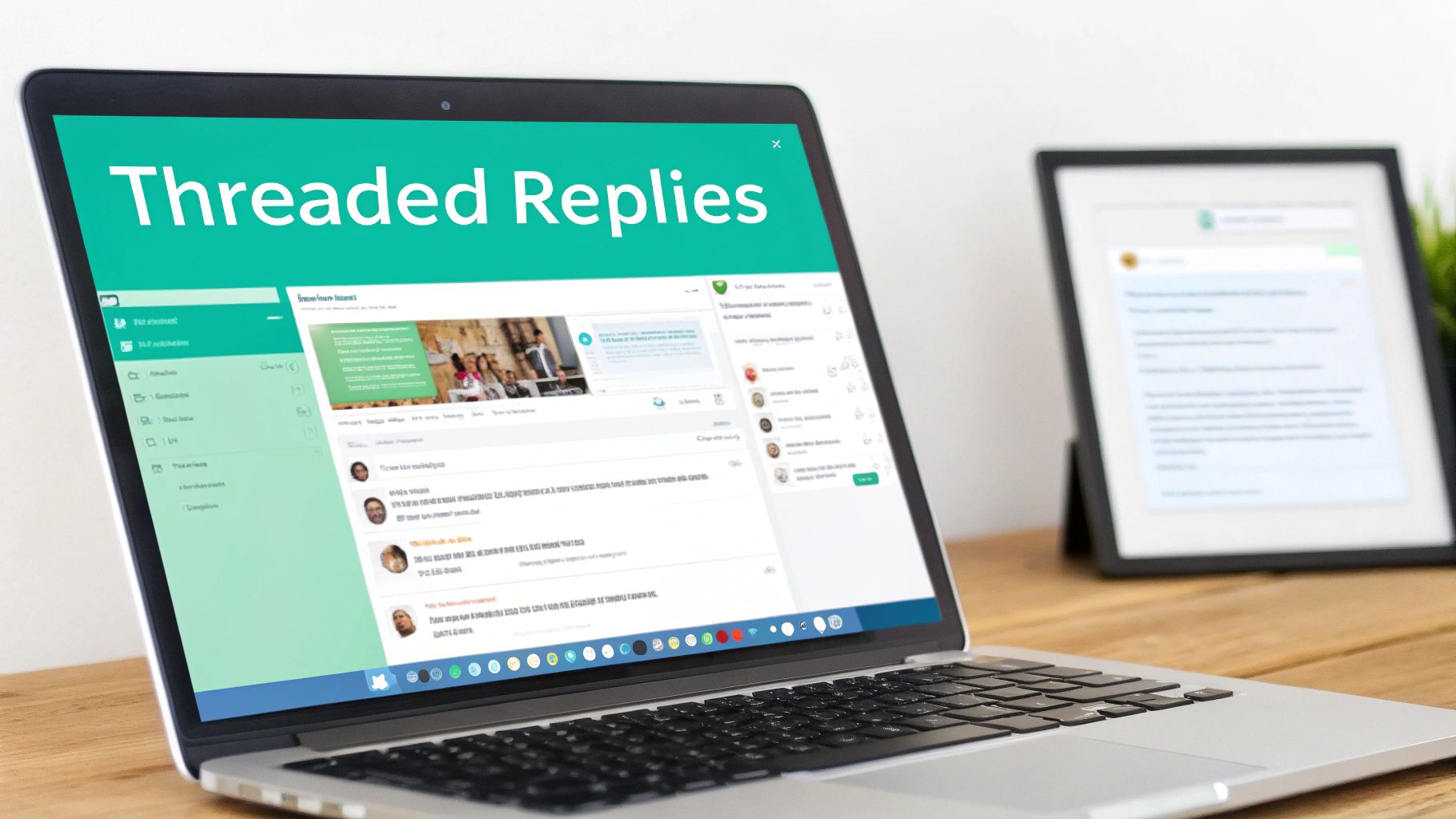
Where channels create broad topic categories, Slack threads bring laser-focused order to individual conversations. Threads are nested replies that keep discussions organized and prevent important context from being lost in the main channel feed. By encouraging teams to reply within a thread, you transform a potentially chaotic channel into a clean, scannable overview, with detailed discussions neatly tucked away. This is one of the most vital communication channel examples for maintaining clarity as team collaboration scales.
Strategic Implementation
Imagine your engineers no longer needing to dig through old bug report threads to find a solution they vaguely remember. They just ask SAI directly in the #engineering-bugs channel, and it instantly synthesizes an answer from relevant historical threads. This is the power of turning threads into a searchable repository of resolved issues. By integrating an AI assistant, you unlock the knowledge trapped inside thousands of past conversations, empowering your team to solve problems once and reuse that knowledge forever.
Actionable Takeaway: Connect SAI to your most active project or support channels to analyze threaded discussions. Identify channels where complex problems are solved, like
#tier-2-escalationsor#product-feature-feedback. This allows SAI to build a deep understanding of your team's problem-solving history, turning past threads into an instant-access knowledge engine.
4. Slack Apps and Integrations
Beyond simple chat, Slack apps and integrations are what transform your workspace into a true command center. These connections pipe data and functionality from other tools directly into your conversations, creating a seamless operational hub. Instead of constantly switching between tabs for Jira tickets, Google Drive files, or GitHub updates, your team can receive notifications and take action from one place. This makes Slack Apps and Integrations a critical example of an evolved communication channel that consolidates workflows and drastically reduces context switching.
Strategic Implementation
Imagine your sales team getting instant answers on a competitor's pricing without digging through a CRM, or your engineering team never having to leave their #dev-ops channel to check a deployment status. This is the transformation when integrations move beyond simple alerts to full-scale answer automation. By integrating an AI assistant like SAI, you add a powerful layer on top of your existing tools, making information accessible through a simple question. This is where communication becomes truly efficient. For more ideas, explore some of the cool Slack apps that can transform your workflow.
Actionable Takeaway: Connect your three most-used business tools to Slack today. Choose the apps your team lives in-like Jira, Google Drive, or your CRM-to centralize notifications. Then, deploy SAI to learn from the information in those connected apps, turning your primary channels into intelligent, self-service support systems for your entire organization.
5. Slack Workflows
Slack Workflows are a powerful communication channel example because they move beyond conversation into automated action. These no-code sequences streamline routine processes directly within Slack, connecting apps and triggering actions based on user input. By setting up workflows for tasks like IT requests, new hire onboarding, or expense approvals, you transform repetitive manual processes into structured, automated conversations. This turns Slack from a place where work is discussed into a place where work gets done efficiently.
Strategic Implementation
Imagine a world where your team gets the information they need before starting a process. Instead of an employee immediately launching an expense approval workflow, they can first ask SAI in the #finance-requests channel about the correct policy. SAI provides an instant answer. If they still need to proceed, the workflow is ready to go. This intelligent, two-step process—information retrieval then action—ensures that workflows are used correctly and efficiently, reducing errors and saving time for everyone.
Actionable Takeaway: Identify a high-volume, multi-step manual process, like lead qualification or incident reporting. Create a simple Slack Workflow to automate the data collection and routing steps. Then, position SAI as the first line of defense in that channel to answer preliminary questions, ensuring only qualified and informed requests trigger the workflow. This reduces noise and improves process quality.
6. Slack Huddles
Slack Huddles are the antidote to calendar clutter, offering spontaneous audio and video conversations directly within any channel or direct message. They bridge the gap between asynchronous text and formal, scheduled meetings, providing a lightweight way for teams to connect in real-time. This is a crucial communication channel example for agile and remote teams who need to resolve issues quickly, brainstorm ideas, or simply have a quick clarifying chat without the ceremony of a video conference. It keeps synchronous collaboration fluid and contained within the context of the ongoing work in Slack.
Strategic Implementation
Crucial insights from spontaneous conversations often vanish once the huddle ends. Imagine your incident response team huddles to resolve an outage. After the call, anyone in the company can ask SAI, What was the final decision from the huddle about the database rollback?
and get an immediate, documented answer. By pairing Huddles with an AI assistant, you create a persistent, searchable record of informal collaboration, ensuring that decisions are never lost and can be acted upon immediately.
Actionable Takeaway: After your next five team huddles, have one person summarize the key decisions and action items and feed them to SAI. This simple habit turns ephemeral conversations into a permanent, accessible knowledge asset, ensuring valuable context is never lost and follow-through is crystal clear.
7. Slack Canvas
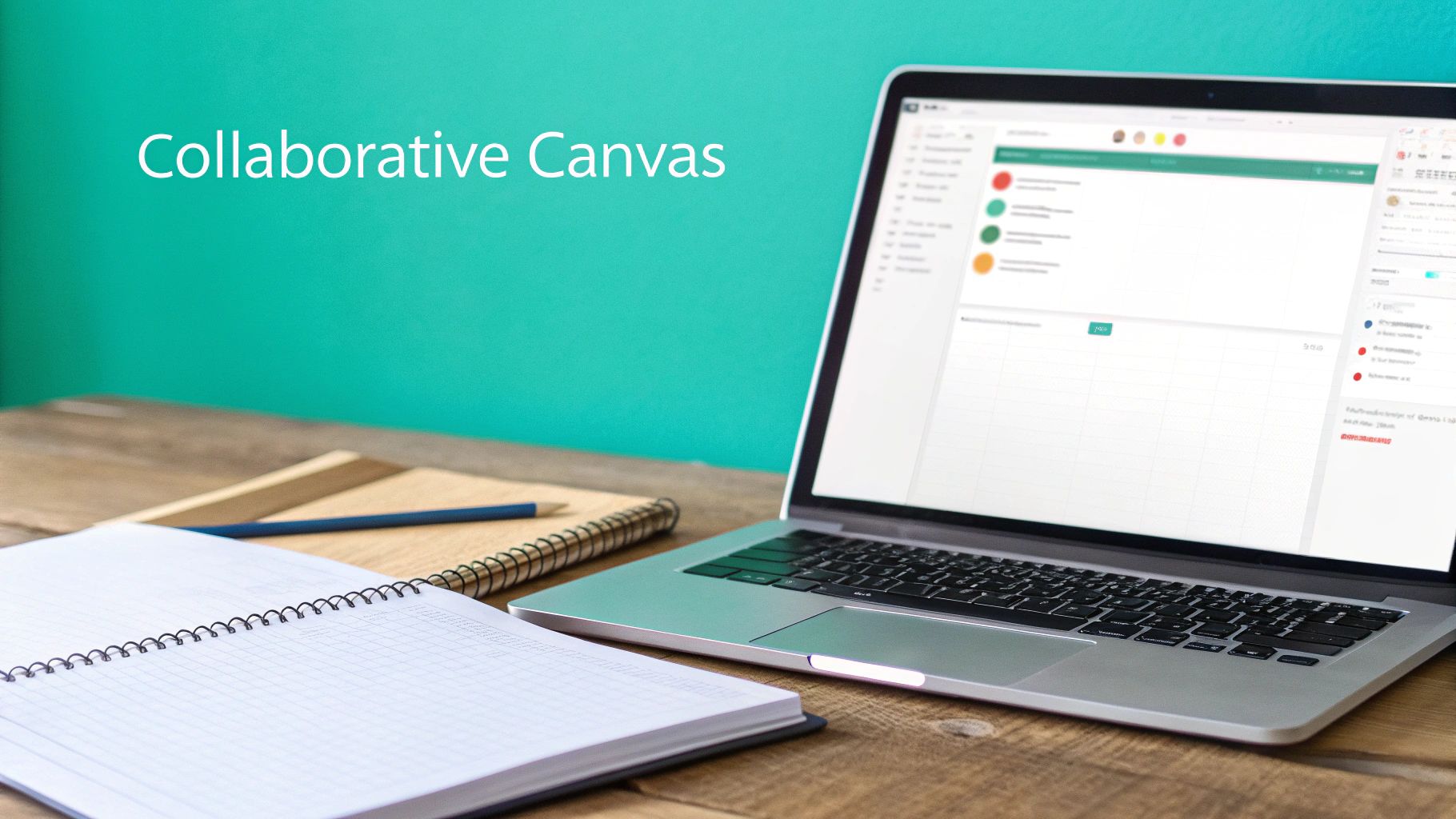
Slack Canvas transforms transient channel conversations into persistent, collaborative documents. It's a surface for creating, sharing, and editing rich information directly within your Slack workspace, keeping crucial context and documentation permanently linked to its relevant discussion. Teams use Canvas to draft project briefs, document meeting notes in real time, and build lightweight wikis, effectively turning chaotic threads into structured knowledge. This is one of the most powerful modern communication channel examples because it bridges the gap between fleeting discussion and permanent record.
Strategic Implementation
Imagine a new hire joining your team. Instead of having to read through a long onboarding document, they can simply ask SAI, What is our Q4 marketing budget?
or Where is the brand style guide?
and receive an instant, accurate answer sourced directly from the team's onboarding Canvas. This becomes possible when you connect Canvas to an AI assistant. It transforms a static document into a dynamic knowledge base, eliminating the need for anyone to manually search for information ever again.
Actionable Takeaway: Create a Canvas template for your team's most common recurring meetings, like project stand-ups or weekly check-ins. Integrate SAI to index these documents as they're created. This ensures all decisions and action items are not only documented but are also immediately searchable and available to the AI, turning meeting notes into an active, intelligent knowledge base.
8. Slack Bot Messages and Notifications
Far more than simple alerts, Slack bot messages are the nervous system of an automated, efficient workspace. These automated communications, sent by apps and workflows, act as proactive agents that deliver crucial information precisely when and where it's needed. Instead of engineers manually checking a deployment status or HR teams chasing down policy acknowledgments, bots handle the notification heavy lifting. This is a critical communication channel example because it automates awareness, delivering everything from GitHub merge confirmations to new support ticket alerts directly into the relevant workflow.
Strategic Implementation
Imagine a new lead alert from your CRM bot appearing in the #sales channel. Instead of the team scrambling to find background information in another tool, they can simply ask SAI in a thread, What's the full history of this account?
and receive a comprehensive summary instantly. This is the transformation that occurs when bots move from one-way announcements to two-way conversations. It closes the loop between awareness and action, empowering your team to respond with full context right away.
Actionable Takeaway: Automate one key notification in your primary operational channel and enhance it with SAI. For an engineering team, set up a Sentry bot to post critical error alerts. Then, configure SAI so that when an alert appears, team members can immediately ask it for the relevant code documentation or past incident reports, turning a reactive alert into a proactive problem-solving session.
9. Slack Shared Channels
Extending collaboration beyond your organization's walls, Slack Shared Channels connect two or more separate workspaces into a single, cohesive channel. This powerful feature eliminates the friction of email and external guest accounts by creating a unified space for clients, vendors, and partners. Imagine your customer success team working directly with a key client in a #acme-corp-partnership channel or coordinating a product launch with an agency in #q4-launch-campaign. This is a crucial example of a communication channel because it securely bridges external and internal teams, accelerating projects and strengthening partnerships.
Strategic Implementation
Imagine your most valuable partners no longer needing to email your team and wait for a response. Instead, they can simply ask SAI about API documentation, project timelines, or support policies directly in your shared channel and receive an instant, verified answer. By integrating an AI assistant, you transform the shared channel into an effortless, instant support gateway. This builds incredible trust, keeps projects on track, and shows your partners you value their time.
Actionable Takeaway: Set up a pilot shared channel with your most strategic partner and integrate SAI. Use it to answer their most common questions automatically, such as those related to product features, billing, or technical specifications. This demonstrates immediate value and sets a new standard for partner collaboration.
10. Slack Search and Knowledge Discovery
Slack's native search transforms your workspace archive from a passive repository into an active communication channel. This powerful tool allows team members to query past conversations, files, and decisions, effectively communicating with the collective knowledge of the entire organization. By searching for keywords, users, or date ranges, an engineer can instantly find a past discussion on a specific bug, or a new hire can locate an onboarding document without asking for help. This turns your Slack history into a foundational example of an on-demand communication channel.
Strategic Implementation
The limitation of native search is that it still requires you to sift through results. Imagine a developer needing to find the API key rotation policy.
Instead of searching for those words and reading through dozens of old messages, they can just ask SAI and get the definitive answer instantly. By integrating an AI assistant, you elevate search from a tool that finds documents to an engine that provides answers. This transforms your Slack archive from a historical log into an interactive, intelligent knowledge base.
Actionable Takeaway: Connect SAI to your Slack workspace to supercharge knowledge discovery. This single action moves your team beyond simple search, creating a frictionless experience where anyone can get immediate, accurate answers from your company's entire history without ever leaving Slack. Learn more about building an AI knowledge base in Slack.
10-Point Comparison of Slack Communication Channels
| Feature | Implementation Complexity 🔄 | Resource Requirements ⚡ | Expected Outcomes ⭐ | Ideal Use Cases 📊 | Key Advantages 💡 |
|---|---|---|---|---|---|
| Slack Channels | Low — create/manage channels and permissions | Low–Moderate — ongoing moderation and maintenance | Organized team communication; enables SAI learning from conversations | Team/project discussions, high-traffic Q&A, onboarding | Transparent, searchable, integrates well with SAI |
| Direct Messages (DMs) | Very low — immediate one‑on‑one chats | Very low — individual time; minimal setup | Private, quick answers; knowledge remains siloed | Sensitive discussions, quick clarifications, feedback | Focused, private, low-friction communication |
| Slack Threads | Low — use nested replies within channels | Low — requires user discipline and training | Reduced channel noise; focused topic conversations | Support ticket follow-ups, feature discussions, bug triage | Keeps related messages together; improves readability |
| Slack Apps & Integrations | Moderate — install/configure apps and permissions | Moderate–High — admin setup, maintenance, data access controls | Extended Slack functionality; automated data flow and actions | CI/CD alerts, ticket systems, document sync, SAI integration | Automates tasks, reduces context switching |
| Slack Workflows | Low–Moderate — no-code builder but needs planning | Low–Moderate — design, test, and maintain workflows | Automates routine processes; consistent operations | Onboarding checklists, approvals, incident response | No-code automation; reduces manual errors and delays |
| Slack Huddles | Low — built-in instant audio/video calls | Moderate — bandwidth and coordination overhead | Fast synchronous collaboration; quick decisions | Quick standups, troubleshooting, design reviews | Instant voice/video in context; reduces scheduled meetings |
| Slack Canvas | Low–Moderate — enable and adopt collaborative docs | Moderate — time to author, organize, and train users | Centralized, editable documentation adjacent to conversations | Meeting notes, project briefs, internal KBs | Reduces tool switching; real-time collaborative editing |
| Bot Messages & Notifications | Moderate — configure triggers and interactive messages | Moderate — tuning to avoid alert fatigue and manage routing | Timely automated alerts and actionable prompts | CI notifications, reminders, support confirmations, SAI replies | Enables 24/7 assistance; makes messages actionable |
| Shared Channels | Moderate–High — cross-workspace setup and governance | High — admin, security, compliance, and cost considerations | Secure external collaboration with auditability | Client collaboration, agency partnerships, vendor coordination | Reduces email; enables controlled partner access |
| Search & Knowledge Discovery | Low — built-in search capabilities | Low–Moderate — training and taxonomy for better results | Fast retrieval of past content but limited synthesis | Finding past decisions, troubleshooting history, onboarding | Comprehensive indexing; preserves audit trail |
From Communication to Automation: Your Next Move
We’ve journeyed through a comprehensive list of communication channel examples, from the synchronous urgency of Slack Huddles to the structured permanence of a Slack Canvas. You now have a strategic blueprint for selecting, combining, and optimizing the right channels for every business function, whether it's supporting customers, managing operations, or shipping code. But simply having a toolbox of channels isn't the final destination. The real, transformative power lies in what you build with them.
The ultimate goal is to evolve beyond a culture of constant searching and shoulder-tapping. Imagine a workday where your team never has to leave Slack to find an answer. No more digging through old threads, searching shared drives, or interrupting a colleague for a piece of information they shared last Tuesday. The insights from this article aren't just about managing messages better; they're about creating a single, intelligent source of truth directly within your existing workflow.
The Shift from Searching to Knowing
The most significant takeaway is this: every channel, thread, and document you use is a repository of valuable, tribal knowledge. The challenge has always been accessing that knowledge efficiently. Imagine a world where, instead of your team hunting for information, the right information finds them. Just ask SAI in Slack, and get the answers you and your team are looking for.
- From reactive to proactive: Questions are answered instantly, turning every inquiry into a learning opportunity that strengthens your collective intelligence.
- From fragmented to unified: Your various communication channels stop being isolated silos. They become interconnected data sources that feed a central brain, accessible to everyone with a simple question.
- From manual effort to automated flow: The tedious work of knowledge management disappears. The system learns and grows organically from the conversations already happening, eliminating the need for manual upkeep of wikis or FAQs.
This is the future of workplace communication. It isn't about adding more tools or more channels. It's about making the channels you already rely on exponentially smarter and more efficient. The true measure of a successful communication strategy isn't how many messages are sent, but how quickly and accurately your team can get the answers they need to do their best work.
By implementing the strategies we've discussed, you're not just improving communication; you're building a resilient, self-sufficient, and highly productive organization. You're giving your team back their most valuable asset: time. Time to focus on innovation, solve complex problems, and drive the business forward, free from the friction of finding information. This is your next move, from managing communication to mastering knowledge automation.
Ready to stop searching and start knowing? Transform your Slack channels into an instant-answer engine with SAI. Add our AI assistant to your busiest channel for free today and watch your team’s productivity soar by putting all your company knowledge just a question away. Get started with SAI.