Employee onboarding best practices: 7 tips for success
Imagine your new hires never having to hunt for information again. Picture them asking any question—from Where's the benefits portal?
to What's our Q3 marketing focus?
—right in Slack and getting an instant, accurate answer. This isn't about a new wiki or a better shared drive; it's about eliminating the frustrating scavenger hunt for knowledge entirely. This is the tangible result of implementing world-class employee onboarding best practices built for the way your team already works.
This reality means no more opening multiple tabs, searching through outdated documents, or interrupting busy colleagues for answers. Instead of managers and teammates answering the same questions repeatedly, everyone can reclaim their focus. Your new employees feel supported and productive from day one, while your existing team stays locked in on high-impact work. This is the new standard for effective onboarding, one that transforms a traditionally chaotic period into a streamlined, automated, and engaging experience.
In this comprehensive roundup, we're not just listing generic steps. We're providing a concrete blueprint to completely overhaul your approach. You will learn the exact strategies to structure pre-boarding, automate routine tasks, and create personalized ramp-up plans all within your Slack workspace. We'll explore the 10 essential practices that will make you wonder how you ever managed onboarding any other way, turning new hires into confident contributors faster than ever before. Let's dive in.
1. Structured Onboarding Program with Clear Timeline
Ad-hoc onboarding leaves new hires feeling lost and managers scrambling. The most effective way to combat this chaos is by implementing a structured onboarding program with a clear timeline. This isn't just a first-day welcome packet; it's a meticulously planned journey, typically spanning 30, 60, or 90 days, designed to transform a new employee into a confident, productive team member. This approach is one of the most crucial employee onboarding best practices because it ensures every hire receives the same foundational knowledge and support, regardless of their team or manager.
Think of it as a roadmap for success. Companies like Google and Salesforce have mastered this, creating comprehensive frameworks that guide new hires through specific milestones, training modules, and performance objectives. The result is a consistent experience that accelerates time-to-productivity and significantly boosts retention rates by setting clear expectations from the start.
How to Implement This Practice
A structured program replaces ambiguity with clarity. It defines what a new hire should know, do, and feel at each stage of their initial employment, turning a potentially overwhelming experience into a manageable and motivating process.
- Create a Master Checklist: Before day one, map out every single touchpoint. This includes IT setup, initial meetings, key training sessions, and social introductions. For a comprehensive template to get you started, check out this guide to building a new employee onboarding checklist.
- Assign Clear Ownership: Every task on your checklist needs an owner. Who schedules the CEO welcome? Who runs the product demo? Assigning responsibility prevents crucial steps from falling through the cracks.
- Schedule Regular Check-ins: Formal check-ins at the 30, 60, and 90-day marks are non-negotiable. These meetings provide a dedicated space to review progress, address roadblocks, and reinforce company goals.
By standardizing the core components of your onboarding, you create a scalable, repeatable system that empowers new hires to succeed faster and feel more connected to your organization from the very beginning.
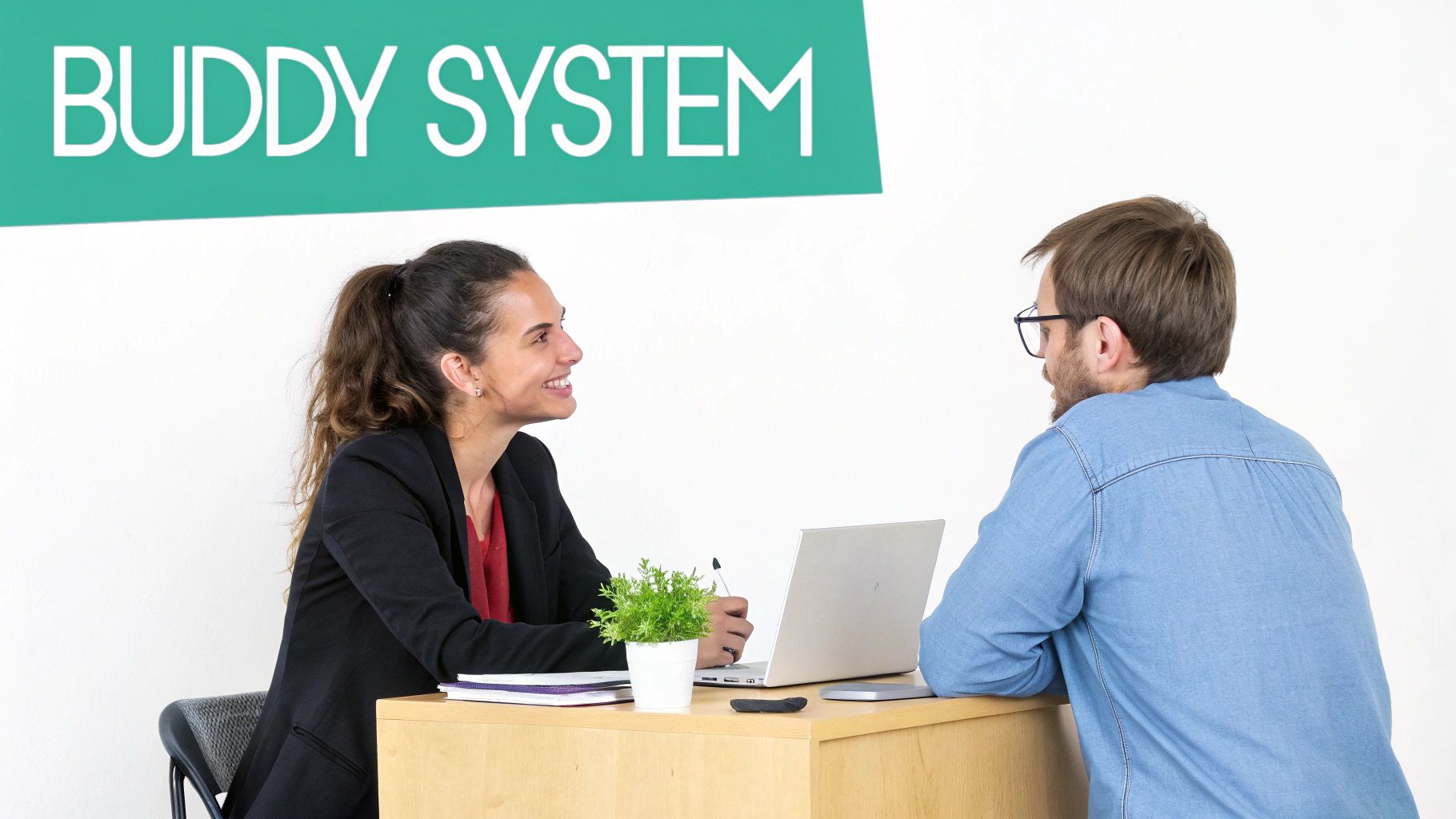
2. Mentorship and Buddy System
Formal training can only teach so much; the unwritten rules, company culture nuances, and informal know-how are learned through human connection. A mentorship or buddy system pairs new hires with experienced colleagues, creating a dedicated support channel outside their direct manager. This relationship-based approach is one of the most impactful employee onboarding best practices because it accelerates cultural integration and provides a safe space for new employees to ask questions they might otherwise hesitate to bring up in a formal setting.
Think of a buddy as a friendly guide for a new hire's first few months. Companies like Cisco and Ernst & Young have demonstrated that formalizing these relationships leads to higher engagement, a stronger sense of belonging, and a dramatic reduction in early-stage turnover. This personal touch transforms the intimidating experience of starting a new job into a welcoming, collaborative journey.
How to Implement This Practice
A successful buddy system is more than just a casual introduction; it's a purposefully designed program that fosters genuine connection and accelerates learning. It gives new hires a trusted peer to navigate everything from navigating internal tools to understanding team dynamics.
- Select Mentors Thoughtfully: The best mentors aren't just top performers or the most tenured employees. Choose colleagues who demonstrate strong interpersonal skills, a deep understanding of company culture, and a genuine desire to help others grow.
- Provide Clear Guidelines: Equip mentors with a simple toolkit. This should include conversation starters, a checklist of key topics to cover (e.g., team communication norms, important Slack channels, where to find project documentation), and suggested check-in frequencies.
- Establish a Dedicated Communication Channel: Create a private Slack channel for each new hire and their buddy. This offers a persistent, informal space for quick questions and check-ins, making it easy for the new employee to get help without feeling like they are interrupting.
By investing in a mentorship program, you build a supportive internal network that not only speeds up a new hire’s ramp time but also strengthens your company culture from the ground up.
3. Pre-Boarding Activities and Communication
The onboarding journey doesn't start on day one; it begins the moment a candidate accepts your offer. Pre-boarding is the crucial period between offer acceptance and the first day, and failing to engage new hires during this time can lead to anxiety and day-one disorganization. A strategic pre-boarding process replaces radio silence with reassuring communication and proactive preparation, setting the stage for a seamless transition. This is a cornerstone of modern employee onboarding best practices because it builds momentum and makes new hires feel valued before they even walk through the door.
Think of it as rolling out the welcome mat before the guest arrives. Companies like Airbnb and Zappos excel at this, using welcome packages, pre-arrival communications, and cultural primers to immerse new hires in their brand. This proactive approach not only eases first-day jitters but also significantly reduces the administrative burden on the first day, allowing for a greater focus on culture and team integration.
How to Implement This Practice
Effective pre-boarding transforms a period of uncertainty into an experience of excitement and belonging. It shows your organization is prepared, professional, and genuinely excited to have the new person join the team, turning a simple administrative phase into a powerful engagement tool.
- Create a Pre-Boarding Communication Drip: Don’t overwhelm them, but don't go silent. Plan a series of timed communications. Send a welcome video from the team lead within 48 hours of offer acceptance, follow up a week later with a link to the employee handbook, and send a
your first week schedule
email a few days before they start. - Handle Logistics Early: The most common source of first-day friction is logistical failure. Ensure IT equipment is shipped and arrives before the start date. Complete all necessary HR paperwork digitally using platforms like DocuSign or Rippling to get it out of the way.
- Assign a
Pre-Boarding Buddy
: Connect the new hire with a team member in a dedicated Slack channel before their start date. This provides an informal point of contact for simple questions likeWhat's the dress code?
orWhat time should I arrive?
, making the new hire feel connected and supported.
By investing in the pre-boarding phase, you reduce no-shows, accelerate ramp-up time, and demonstrate a commitment to your new hire’s success from the very beginning.
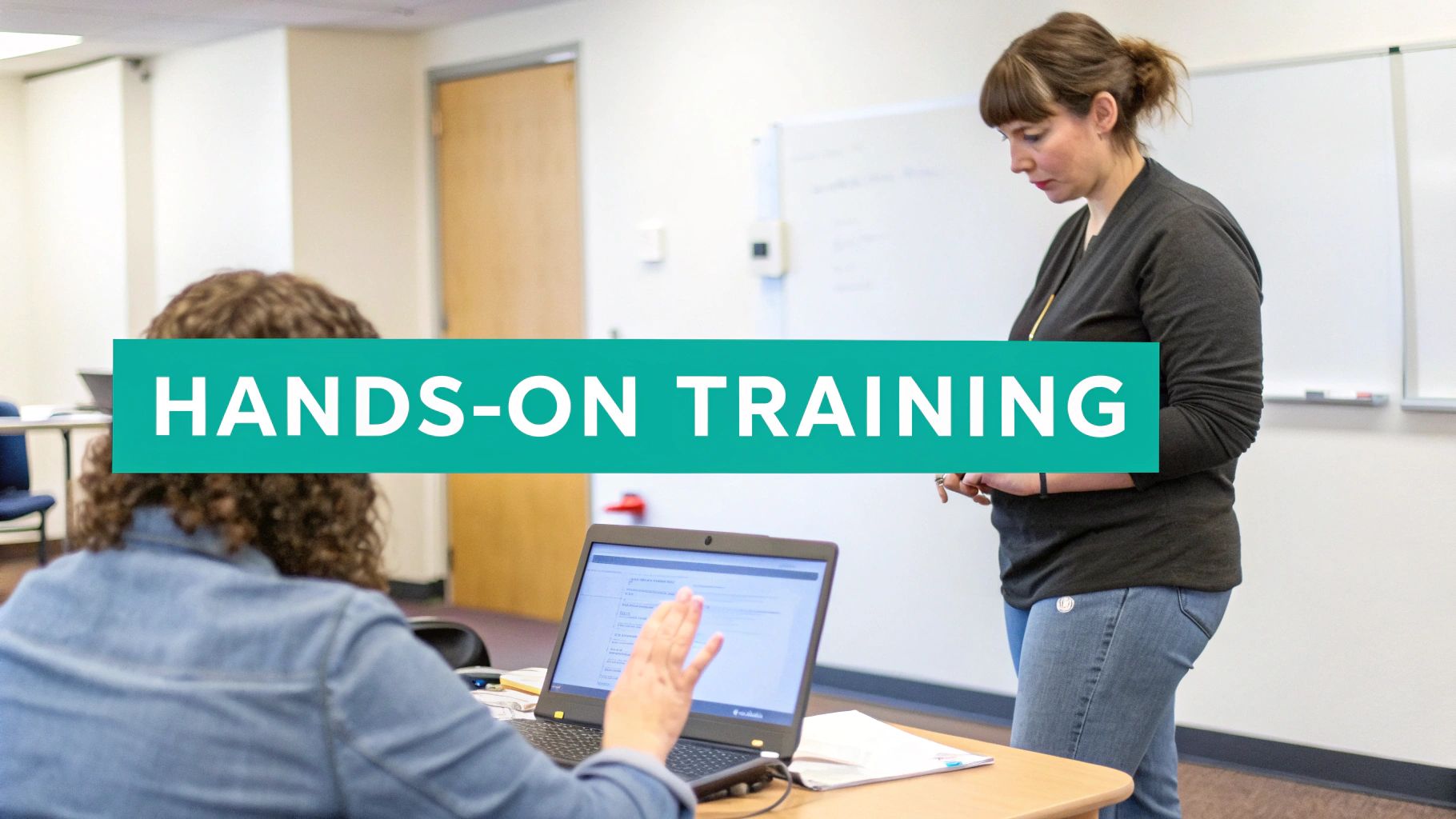
4. Interactive Training and Hands-On Learning
Traditional onboarding often involves passively watching presentations or reading dense handbooks, leading to low engagement and poor knowledge retention. A far more effective approach is to implement interactive training and hands-on learning. This method trades lectures for experiences, using simulations, workshops, and practical exercises to immerse new hires in their roles. This strategy is one of the most powerful employee onboarding best practices because it helps employees build muscle memory and confidence by doing, not just listening.
Think of it as the difference between reading a manual on how to ride a bike and actually getting on one. Companies like Deloitte and McKinsey have built their onboarding around this principle, using immersive case studies and collaborative workshops to simulate real-world challenges. New hires don't just learn about the company's problem-solving framework; they use it from day one, accelerating their ability to contribute meaningfully.
How to Implement This Practice
Experiential learning transforms new hires from passive observers into active participants. It anchors theoretical knowledge in practical application, making learning more relevant, memorable, and immediately useful in their day-to-day work.
- Use Real-World Scenarios: Design training activities around actual client problems, internal challenges, or common tasks the new hire will face. This makes the learning directly applicable and demonstrates the real-world impact of their role.
- Create Safe-to-Fail Environments: Allow new employees to practice skills in a low-stakes setting where making mistakes is part of the learning process. Use sandboxes for software training or role-playing for customer interactions to build confidence without real-world consequences.
- Incorporate Peer and Group Learning: Structure activities that require collaboration with other new hires or tenured team members. This not only reinforces learning through discussion but also helps build crucial internal relationships and social connections from the start.
By shifting from passive information dumps to active, hands-on experiences, you empower new employees to develop practical skills and critical thinking abilities much faster, ensuring they are prepared and productive in their new roles.
5. Clear Role Definition and Expectations Setting
Ambiguity is the enemy of productivity. When a new hire doesn't fully grasp their role, responsibilities, and how success is measured, they waste precious time on the wrong tasks or hesitate to take initiative. Defining the role and setting expectations with absolute clarity is a cornerstone of employee onboarding best practices because it provides the psychological safety and direction needed to make an immediate impact. It transforms a new hire's nervous energy into focused, confident action.
Think of this as providing a detailed map and compass on day one. Companies like Intel and Accenture build their entire onboarding around this principle, using competency frameworks and detailed role charters to ensure every new team member knows exactly what is expected of them, how their work contributes to the bigger picture, and what a successful first quarter looks like. This clarity is not restrictive; it’s empowering, and it’s a critical driver of early performance and long-term engagement.
How to Implement This Practice
A formal expectations-setting process removes guesswork and prevents future misalignment. It explicitly documents the what, why, and how of a new hire’s role, creating a shared understanding between the employee and their manager from the very beginning.
- Develop a Role Scorecard: Create a single-page document that outlines the role's mission, key responsibilities, and primary performance metrics. This scorecard should be the central point of reference for their first 90 days.
- Set 30-60-90 Day SMART Goals: Don't just list tasks; define what success looks like at each milestone. For example, a 30-day goal might be to complete all required training, while a 90-day goal could be to independently manage a specific project.
- Formalize the Conversation: Schedule a dedicated meeting within the first week specifically to review the role scorecard and 90-day plan. Make it a dialogue, allowing the new hire to ask clarifying questions and ensure you are both aligned. To standardize this critical process, you can even document it as an SOP; learn more about how to write a standard operating procedure.
By investing time upfront to define the role with precision, you equip new hires with the confidence and clarity they need to start contributing meaningfully, avoiding the common pitfalls of confusion and mismatched expectations.
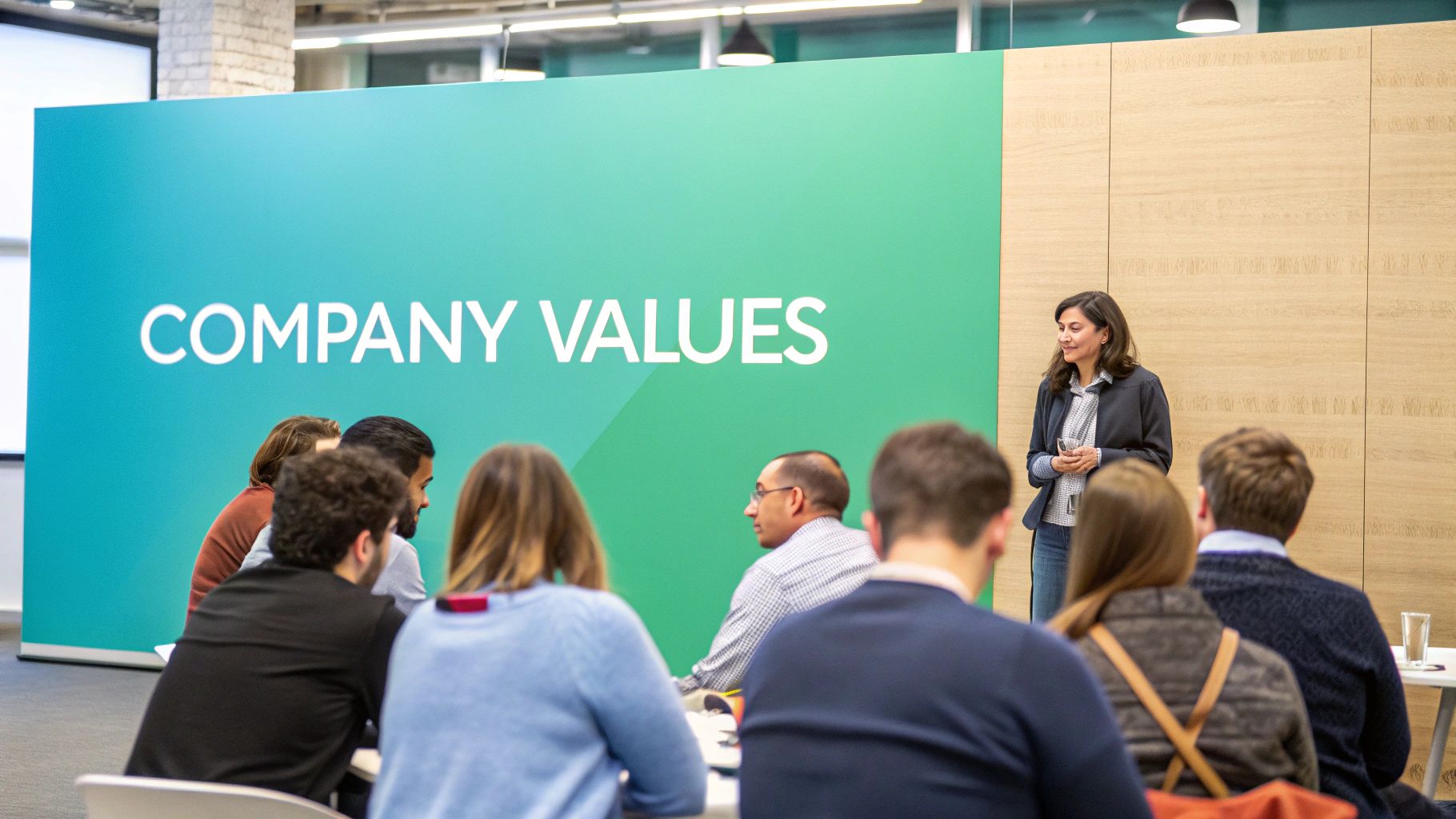
6. Cultural Integration and Values Alignment
A new hire can master the technical aspects of their job, but if they don't connect with your company's culture and values, they'll never truly belong. Intentional cultural integration goes beyond a brief mention of the mission statement; it's the process of actively immersing new employees in the behaviors, norms, and beliefs that define your organization. This is one of the most critical employee onboarding best practices because it transforms onboarding from a logistical checklist into a deeply human experience, fostering a sense of belonging that is a key driver of long-term retention.
Think of the legendary culture at companies like Zappos or Netflix. They don't just hire for skill; they onboard for cultural fit and alignment, ensuring every new team member understands the why
behind the what.
This deliberate approach ensures that as your company grows, your core identity remains strong and consistent, preventing the cultural dilution that plagues many fast-scaling organizations. The result is a more engaged, cohesive, and mission-driven workforce.
How to Implement This Practice
Cultural integration isn't a one-time event; it’s an ongoing conversation woven throughout the onboarding journey. It’s about showing, not just telling, what it means to be part of your team and connecting daily tasks back to the bigger picture.
- Share Origin Stories: Have a founder or senior leader share the company's history, mission, and vision during the first week. Hearing this passion firsthand is far more impactful than reading it on a website.
- Create Culture Ambassadors: Designate experienced employees who exemplify your values to mentor new hires. These ambassadors can answer nuanced questions and model the desired behaviors in a natural, authentic way.
- Translate Values into Actions: Dedicate a session to discussing how company values apply to specific, day-to-day scenarios. For example, if
customer obsession
is a value, share stories of how team members have gone above and beyond for a client. - Integrate into Social Rituals: Plan low-pressure social activities, like team lunches or virtual coffee chats, that allow new hires to build personal connections and observe team dynamics outside of formal meetings.
By prioritizing cultural alignment, you ensure new employees don't just learn how to do their job; they learn how to thrive within your unique environment, contributing to a stronger, more unified company identity.
7. Technology Platform and Digital Onboarding Systems
Imagine never having to track onboarding progress on a spreadsheet again. To achieve a truly scalable experience, modern organizations leverage technology platforms and digital onboarding systems. This isn't just about digitizing paperwork; it's about creating a centralized, automated, and personalized journey for every new hire, right where they already work. Adopting this approach is a cornerstone of employee onboarding best practices as it ensures consistency, boosts efficiency, and provides invaluable data on program effectiveness.
Think of it as the central nervous system for your onboarding program. Instead of juggling multiple tools, new hires have one place to go for tasks, resources, and answers. This seamless, professional experience frees up HR and managers from administrative burdens, allowing them to focus on the human elements of integration like mentorship and team building.
How to Implement This Practice
A dedicated technology platform transforms onboarding from a series of disjointed tasks into a cohesive and measurable strategy. It serves as the single source of truth for new hires, guiding them through their initial weeks with clarity and purpose, right within the tools they already use like Slack.
- Integrate with Your Existing Tech Stack: Choose a platform that seamlessly connects with your current HRIS, ATS, and communication tools (especially Slack). This creates a unified experience and prevents data silos, ensuring information flows smoothly from recruitment through to full productivity.
- Automate the Repetitive, Personalize the Human: Use the system to automate administrative tasks like IT provisioning, payroll forms, and scheduling introductory meetings. This frees up valuable time for managers to conduct meaningful one-on-ones and for team members to provide personalized support.
- Centralize Knowledge Access: Imagine your new hire never needing to search a drive or wiki again. The right platform allows them to simply ask questions in Slack and get instant answers. Instead of digging for the marketing style guide, they just ask for it and receive the link immediately. This is the goal of a modern knowledge management system.
- Measure and Optimize with Analytics: Utilize the platform’s built-in analytics to track completion rates, gather feedback through surveys, and identify bottlenecks in your process. This data-driven approach allows you to continuously refine and improve the onboarding experience for future hires.
8. Regular Check-Ins and Feedback Loops
Onboarding is not a set it and forget it
process. The initial excitement of day one can quickly fade into uncertainty without a consistent channel for communication. This is why establishing regular check-ins and feedback loops is a cornerstone of effective employee onboarding. These aren't just casual chats; they are structured conversations, typically at 30, 60, and 90-day intervals, designed to proactively monitor progress, provide constructive feedback, and uncover potential roadblocks before they derail a new hire's success. This practice is one of the most impactful employee onboarding best practices because it transforms onboarding from a monologue into a dialogue, making new hires feel heard, valued, and supported.
Think of these check-ins as preventative maintenance for the employee experience. Companies like Adobe and Google have institutionalized this approach, creating a culture where frequent feedback is the norm from the very beginning. This ongoing dialogue ensures that expectations are aligned, misunderstandings are clarified early, and support can be adjusted in real-time. The result is a more adaptive and responsive onboarding journey that boosts confidence and accelerates a new hire's integration into their role and the company culture.
How to Implement This Practice
A structured feedback cadence replaces assumption with assurance. It provides dedicated moments to assess a new hire's progress against their onboarding plan, ensuring they are on the right track while also giving them a safe space to ask questions and share their own observations.
- Schedule in Advance: Don’t leave these crucial meetings to chance. Book the 30, 60, and 90-day check-ins on the calendar during the new hire's first week. This signals their importance and ensures they happen.
- Use a Consistent Framework: Create a simple, repeatable agenda for each check-in. This could include discussing wins, reviewing progress against goals, identifying challenges, and setting priorities for the next period. Consistency makes the process fair and scalable.
- Ask Open-Ended Questions: Go beyond
How's it going?
Ask specific questions like,What has been the most challenging part of your role so far?
orWhat support or resources would be most helpful for you right now?
This encourages honest, detailed feedback. - Document and Follow Up: Keep a record of the discussion, key takeaways, and any action items. A quick follow-up message in a private Slack channel with the new hire can reinforce your conversation and show you are committed to their success.
By building these intentional touchpoints into your process, you create a powerful feedback loop that catches issues early, builds trust, and ensures every new employee has the direct support they need to thrive.
9. Department and Team Introduction Activities
Technical skills are only one part of the equation; a new hire's ability to navigate the social and organizational landscape is equally vital. Strategic introductions to colleagues, cross-functional teams, and key stakeholders build the internal network essential for collaboration. This isn't about a quick wave in the hallway; it’s a planned integration process. This deliberate approach to social onboarding is a cornerstone of employee onboarding best practices because it accelerates relationship-building and helps new hires understand who to go to for what.
Simply putting names to faces is not enough. Companies like Stripe facilitate this through peer introduction programs, while Buffer leverages its virtual community for warm, asynchronous welcomes. The goal is to give new hires a mental map of the organization, showing them not just their immediate team but also the key players in departments they will collaborate with. This early networking pays dividends in productivity, reducing the time new hires spend trying to figure out how things really get done.
How to Implement This Practice
A structured introduction plan transforms new hires from outsiders into integrated team members. It provides context for each relationship, making future collaborations smoother and more effective from day one.
- Create an Introduction Roadmap: Before the new hire starts, identify 5-10 key people they should meet within their first few weeks. This list should include their direct team, a key leader, and contacts from 2-3 departments they will work with regularly.
- Provide Context and Purpose: Don't just book a generic
meet and greet.
For each introduction, provide both parties with context. Let the new hire know why this person is important to their role, and give the established employee a brief bio of the new hire and the meeting's purpose. - Facilitate Meaningful Connections (Remote or In-Person): For remote teams, use video calls to personalize these introductions. Schedule a virtual team coffee or a catered lunch delivered to everyone to foster informal connections. The goal is to create genuine rapport, not just a series of transactional meetings.
10. Customization and Role-Specific Onboarding Paths
A one-size-fits-all onboarding program is a missed opportunity. A new sales executive has vastly different 30-day goals than a software engineer, yet many companies push them through the exact same generic orientation. Creating customized, role-specific onboarding paths is an advanced practice that tailors the experience to an individual's specific function, department, and seniority level. This personalized approach is a cornerstone of effective employee onboarding best practices because it drastically improves relevance, engagement, and the speed at which new hires can contribute meaningfully.
This isn't just about different training modules; it’s about creating a unique journey. Companies like Microsoft and Deloitte excel at this by developing distinct onboarding tracks for engineers, sales staff, and support specialists. Each path shares a core curriculum on culture and company-wide tools but then branches into specialized content, role-specific mentors, and performance goals that matter most to that individual's success. The outcome is a new hire who feels understood and is equipped with precisely the right information to excel from day one.
How to Implement This Practice
Personalizing the onboarding journey acknowledges that every role is unique. It focuses on delivering high-impact, relevant information that accelerates proficiency rather than overwhelming new hires with content that doesn't apply to their daily work.
- Identify Primary Role Clusters: You don't need a unique path for every single job title. Start by grouping similar roles into 3-5 primary clusters, such as
Technical,
Sales & Marketing,
Operations,
andCustomer-Facing.
- Layer Role-Specific Modules: Build a foundational onboarding program that all new hires complete. Then, layer on specialized training modules, introductions to key departmental stakeholders, and access to role-specific documentation for each cluster. For example, a
Technical
track might include a deep dive into the codebase and a meeting with the lead architect. - Use Slack for Targeted Communication: Create private Slack channels for each onboarding cohort or role cluster (e.g.,
#new-hires-q4-eng,#new-hires-q4-sales). Use these channels to share targeted resources, facilitate role-specific Q&A sessions, and foster a sense of community among peers. This ensures every message is relevant and valuable to its audience.
10-Point Employee Onboarding Comparison
| Approach | Implementation Complexity 🔄 | Resource Requirements ⚡ | Expected Outcomes ⭐📊 | Ideal Use Cases 💡 | Key Advantages ⭐ |
|---|---|---|---|---|---|
| Structured Onboarding Program with Clear Timeline | 🔄 High — multi‑phase design, governance & updates | ⚡ Moderate–High: HR, managers, LMS integration | ⭐📊 Consistent onboarding; faster time‑to‑productivity; improved retention | 💡 Medium–large orgs, high‑volume or regulated hiring | ⭐ Measurable milestones; scalable repeatability |
| Mentorship and Buddy System | 🔄 Medium — mentor selection, matching & minimal structure | ⚡ Low–Moderate: mentor time and oversight | ⭐📊 Personalized integration; stronger engagement and belonging | 💡 Small teams, culture-heavy organizations, tacit‑knowledge roles | ⭐ One‑on‑one guidance; improves informal learning |
| Pre-Boarding Activities and Communication | 🔄 Low–Medium — cross‑team coordination required | ⚡ Low: communications, IT provisioning, paperwork | ⭐📊 Reduced day‑one friction; earlier productive contribution | 💡 Remote hires, fast‑start roles, high‑volume onboarding | ⭐ Better first impressions; fewer administrative delays |
| Interactive Training and Hands‑On Learning | 🔄 High — design simulations, facilitators & materials | ⚡ High: trainers, tech (simulations), dedicated time | ⭐📊 Higher retention (~65–75%); faster competency development | 💡 Technical, client‑facing, or high‑risk operational roles | ⭐ Deep skill application; identifies knowledge gaps early |
| Clear Role Definition and Expectations Setting | 🔄 Low–Medium — manager prep and documentation | ⚡ Low: time to document, meeting time | ⭐📊 Reduced role ambiguity; aligned priorities and measurable goals | 💡 Performance‑driven teams, evolving roles needing clarity | ⭐ Clear success criteria; easier evaluation and prioritization |
| Cultural Integration and Values Alignment | 🔄 Medium — programming, leader involvement & reinforcement | ⚡ Moderate: events, ambassadors, ongoing activities | ⭐📊 Improved belonging and cultural cohesion (harder to quantify) | 💡 Mission‑driven companies, retention‑focused orgs | ⭐ Strengthens identity and normative behaviors |
| Technology Platform and Digital Onboarding Systems | 🔄 High — implementation, integration & maintenance | ⚡ Moderate–High: licensing, IT, content management | ⭐📊 Scalable, trackable onboarding; analytics for improvement | 💡 Scaling or distributed organizations, remote workforces | ⭐ Automates processes; centralizes tracking and personalization |
| Regular Check‑Ins and Feedback Loops | 🔄 Low–Medium — scheduling and manager skill building | ⚡ Moderate: manager time, documentation | ⭐📊 Early issue detection; supports course correction and retention | 💡 New hires in first 90 days; roles needing close coaching | ⭐ Two‑way feedback; fosters psychological safety |
| Department and Team Introduction Activities | 🔄 Low — planning meet‑and‑greets and stakeholder mapping | ⚡ Low–Moderate: coordination, events or calls | ⭐📊 Accelerated relationship building; improved collaboration | 💡 Cross‑functional roles, remote hires, new team integrations | ⭐ Faster network building; clearer stakeholder context |
| Customization and Role‑Specific Onboarding Paths | 🔄 High — design multiple tracks and routing logic | ⚡ High: content creation, LMS tagging, maintenance | ⭐📊 Higher relevance; faster role competence and engagement | 💡 Organizations with diverse roles or specialty tracks | ⭐ Personalized learning; better ROI on training investments |
Transform Onboarding into Your Greatest Competitive Advantage
Moving from a disjointed, manual onboarding process to a streamlined, automated one isn't just an operational upgrade; it's a profound strategic transformation. The employee onboarding best practices we've explored are the building blocks of a system that turns new hires into confident, high-performing team members in record time. It’s about consciously designing an experience that communicates value, fosters connection, and accelerates contribution from day one.
When you implement a structured program with clear timelines, a dedicated buddy system, and thoughtful pre-boarding, you’re not just checking boxes. You are sending a powerful message: We are invested in your success.
This initial investment pays dividends in loyalty, engagement, and a reduced time-to-productivity that directly impacts your bottom line.
From Information Overload to Instant Clarity
Think about the traditional onboarding experience. A new hire opens their laptop to a flood of documents, links to wikis, and calendar invites. They spend their first weeks trying to find answers, hesitating to ask repetitive questions, and feeling like they're interrupting their busy new colleagues. This friction is a silent killer of momentum and enthusiasm.
Now, imagine a different reality. A new marketing manager needs the brand's official hex codes for a presentation. A junior developer is looking for the team’s code review guidelines. Instead of digging through a shared drive, pinging a colleague, or searching a clunky internal wiki, they simply ask a question in Slack and get an instant answer.
The shift is from finding information to receiving answers. This fundamental change eliminates the cognitive load of resource hunting and empowers new hires to get what they need, exactly when they need it, allowing them to focus on the work that truly matters.
This is the core transformation at stake. Adopting these employee onboarding best practices isn't about creating the perfect handbook that no one will read. It’s about building a living, breathing knowledge ecosystem within the platform your team already uses every day: Slack. By capturing institutional knowledge and making it instantly accessible, you free up your entire organization from the tax of answering the same questions over and over again. Your senior engineers can spend more time coding, not explaining setup procedures. Your marketing leads can focus on strategy, not hunting for brand assets.
Onboarding as a Continuous Growth Engine
Ultimately, a world-class onboarding program becomes a self-sustaining engine for growth and retention. It creates a powerful feedback loop where regular check-ins and clear expectation-setting not only help the new hire but also provide invaluable insights to refine your processes. You build a culture where knowledge is shared freely and support is embedded into the daily workflow.
The end result is more than just a faster ramp-up. It's a stronger, more aligned, and more agile organization. When you master onboarding, you create a repeatable system for success that scales with your company. You don't just hire people; you empower them to do their best work from the moment they accept the offer. This isn't just good HR; it's your single greatest competitive advantage.
Ready to stop the repetitive questions and build an onboarding system that runs itself? See how SAI can become your team's central source of truth, delivering instant answers right inside Slack. Learn more and get started at SAI.